Chasing Currents: Navigating the Wild Rivers of Patagonia

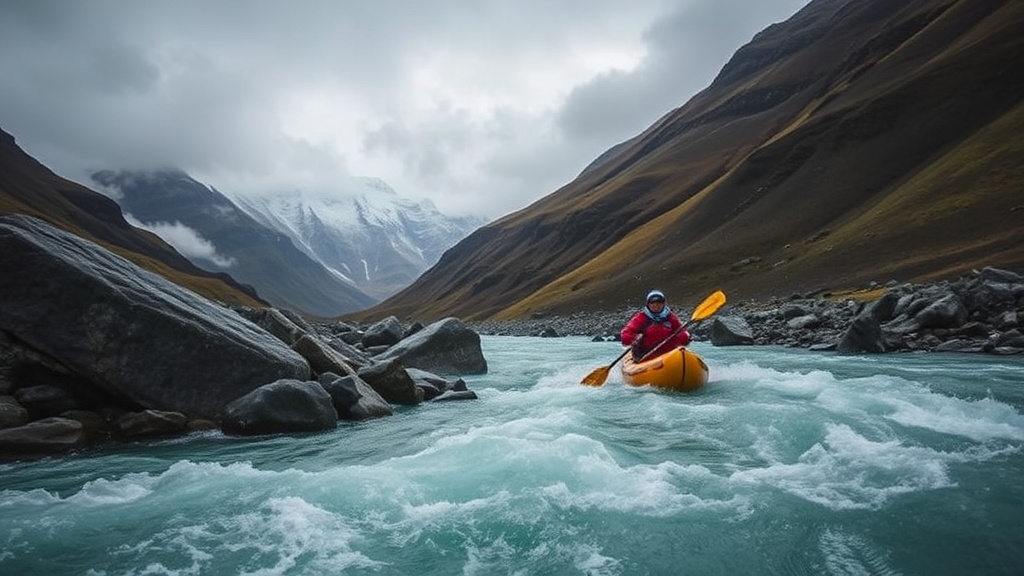
The water is a bruising shade of turquoise, moving with a violent, rhythmic force that makes the heavy Kevlar paddle feel like a toothpick. You are sitting in a 14-foot heavy-duty whitewater raft, and the roar of the Futaleufú River is so loud it vibrates in your chest. A technical Class IV rapid approaches—a series of standing waves and unpredictable lateral currents—and suddenly, the sheer volume of the meltwater makes every decision feel permanent. In Patagonia, the water doesn't just flow; it commands the landscape.
Navigating the river systems of Southern Patagonia, particularly in the Los Glaciares and Aysén regions, requires more than just physical stamina. It requires a logistical framework built on understanding glacial melt cycles, high-velocity wind patterns, and the specific technical demands of heavy-volume whitewater. For the professional traveler who manages a budget and a calendar, planning a river expedition here isn't about spontaneity; it's about calculating variables.
The Geography of High-Volume Whitewater
Unlike the predictable seasonal flows of the American West, Patagonian rivers are dictated by the erratic temperament of the Andes. The primary rivers—the Futaleufú in Chile and the Baker River—are fed by massive glacial melts. This creates a unique hydrological profile: the water is incredibly cold (often hovering between 4°C and 10°C), highly silted, and subject to sudden "pulse" events where melting glaciers can rapidly increase the CFS (cubic feet per second) levels.
The Futaleufú River (Chile): Often cited as one of the best whitewater rivers in the world, the "Fu" offers technical Class IV and V rapids like "Terminator" and "The Big One." The river is characterized by large, powerful waves and deep holes. If you are planning a trip here, you must time your arrival for the window between late November and early March. Outside of this window, the water levels can become dangerously unpredictable due to early season snowmelt or late-season freezes.
The Baker River (Chile): This is a massive volume river. It is less about technical maneuvering around boulders and more about managing the sheer power of the current. The Baker is wider and more expansive, requiring a different set of paddle strokes and a higher level of core stability to maintain balance in the heavy, surging swells.
Logistics and Cost Breakdown
A serious river expedition in Patagonia is not a "budget" endeavor, but it can be optimized. You are paying for specialized equipment, expert guides, and the massive logistical undertaking of moving gear into remote valleys. Below is a realistic breakdown of what to expect for a 7-day guided rafting expedition.
- Guided Expedition (High-End): $2,500 – $3,800 USD per person. This typically includes professional guides, high-quality rafts, safety gear (PFDs, helmets), and gourmet meals prepared at riverside camps.
- Self-Guided (Advanced): $1,200 – $1,800 USD. This assumes you are renting high-quality gear and managing your own food and transport. This is only recommended for those with significant whitewater experience and a solid understanding of managing packable gear for wet environments.
- Internal Flights & Transport: $400 – $600 USD. Getting to remote hubs like Puerto Montt or Coyhaique often requires regional flights (LATAM or Sky Airline) and significant ground transport.
Essential Gear: The Technical Layering System
In Patagonia, the wind is as much an adversary as the water. You can be in a dry suit on the river, but the moment you step onto the bank, the temperature can drop 10 degrees in minutes. Your gear must be optimized for rapid transitions between high-exertion paddling and stationary cold exposure.
The Dry Suit Requirement: Do not attempt a multi-day river trip in a standard wetsuit. The thermal conductivity of glacial water is too high. You need a high-quality dry suit with reinforced knees and seat, such as the Kokatat Maximus or a Sims technical suit. Ensure the gaskets are high-grade latex to prevent leaks during heavy splashing.
Footwear and Protection: You need footwear that provides grip on wet, slick rocks and can be worn inside a dry suit. Neoprene booties with a hard sole (like the Astral series) are the standard. For the banks, a pair of lightweight, quick-drying trail runners is essential for when you transition out of your paddling kit.
Thermal Management: Use a three-layer system.
- Base Layer: Merino wool (e.g., Smartwool or Icebreaker). Avoid synthetic blends that can hold odors or lose thermal properties when damp.
- Mid Layer: A heavy fleece or a technical mid-weight puffer.
- Outer Layer: A high-quality Gore-Tex shell for when you are not in the boat.
Risk Mitigation: Reading the Water and the Weather
The most dangerous element of Patagonian rivers is the "Wind-Driven Surge." In the narrow canyons of the Andes, the wind can accelerate, creating "wind waves" on top of the river's natural hydraulics. This makes the water surface incredibly turbulent and can push a raft off its intended line in a technical rapid.
Technique: The High Brace and Lean
When navigating heavy, aerated water (white water), your center of gravity is constantly shifting. You must master the "high brace." This involves keeping your paddle blade flat on the water surface to provide a stable platform for your weight. If a wave hits the side of the raft, do not lean away from the wave; lean into the pressure to prevent a flip. This is a fundamental skill that should be practiced in controlled environments before attempting a Class IV run.
The "River Left/Right" Rule: In many Patagonian rapids, the current is extremely directional. If you see a "boil" (where water is bubbling up from the bottom), it indicates a deep, turbulent hole. Avoid these at all costs. If you are forced into one, use a strong, aggressive forward stroke to maintain momentum. Momentum is your best friend in heavy water; a slow boat is a sinking boat.
Planning Your Itinerary: The Window of Opportunity
To maximize your time, do not treat your river trip as an isolated event. Most high-level adventurers pair their river expeditions with trekking in the nearby national parks. For example, after finishing a descent on the Futaleufú, many move toward the Lake District or the Torres del Paine region.
If your trip involves significant movement between river access points and mountain bases, you must be disciplined about your weight. Heavy, water-logged gear will ruin your mobility. I highly recommend reviewing my guide on lightweight packing for trekking to ensure your terrestrial gear doesn't become a liability once you leave the boat.
Pro-Tip on Timing: If you are traveling during the shoulder season (late March or early April), you will encounter much smaller crowds and lower prices, but you also face a significantly higher risk of "The Big Wind." If you choose this route, ensure your base camp equipment (tents/shelters) is rated for 50+ knot gusts. A standard lightweight backpacking tent will not survive a Patagonian storm.
Final Checklist for the Serious Expeditionist
Before you book your flights, ensure you have checked the following:
- Hydration Strategy: Glacial water is pure but can be heavy in silt. Bring a filtration system (like a Katadyn pump or Sawyer Squeeze) to ensure you aren't consuming excessive sediment.
- Navigation: GPS is unreliable in deep Andean canyons. Always carry a physical topographic map and a waterproofed compass.
- Insurance: Standard travel insurance often excludes "high-risk whitewater activities." Verify that your policy specifically covers Class IV+ rafting and medical evacuation via helicopter.
- Skill Verification: If you are not an experienced paddler, do not attempt to self-guide. The cost of a professional guide is a fraction of the cost of a search-and-rescue operation.
Patagonia is not a place for the unprepared. The rivers are powerful, the weather is volatile, and the margins for error are slim. But if you respect the physics of the water and prepare with the same precision you use in your professional life, the reward is an experience that stays with you long after the adrenaline has faded.