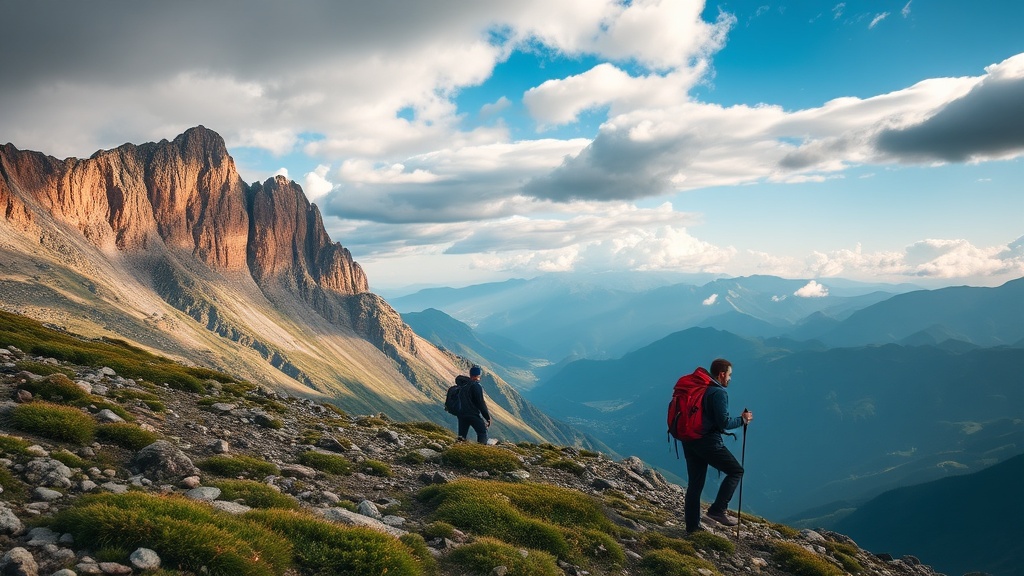
Epic Adventure Travel: Planning Your First Multi-Day Trekking Expedition

What Gear Do You Actually Need for a Multi-Day Trek?
You need a 65-liter pack, three-season sleeping bag, waterproof boots, and layered clothing that handles everything from sun to sudden storms. Everything else is negotiable depending on your route and comfort tolerance.
Start with the pack. The Osprey Atmos AG 65 remains a favorite for good reason—the Anti-Gravity suspension distributes weight across your hips so shoulders don't scream by day three. That said, try before you buy. What feels fine in the store for ten minutes might chafe after eight hours on the trail.
Footwear demands similar scrutiny. Trail runners work for dry, well-maintained paths (think the Tour du Mont Blanc in summer). For rockier terrain or shoulder-season mud, the Merrell Moab 3 Mid WP offers ankle support and waterproofing without the break-in agony of traditional leather boots. Whatever you choose, wear them for at least 100 miles before the trek. Blisters at mile five of a fifty-mile journey ruin everything.
Sleep systems confuse people. Here's the thing: that 0°F sleeping bag marketed for "four-season use" will cook you in Peru's dry season. Match your bag's temperature rating to the coldest expected night—then subtract ten degrees if you sleep cold. Pair it with the Therm-a-Rest NeoAir XTherm pad. The R-value of 6.9 means you won't lose heat to frozen ground (trust me, ground chill destroys sleep faster than snoring tent-mates).
Clothing follows the layering rule: merino base layers (Icebreaker or Smartwool—avoid cotton like it owes you money), fleece mid-layer, and a hardshell jacket for precipitation. The Patagonia Torrentshell 3L costs around $150 and handles monsoon-level rain without the premium price of Gore-Tex Pro alternatives.
Skip the gear FOMO. You don't need $400 trekking poles, a satellite messenger for established routes with cell coverage, or a water filter when iodine tablets weigh nothing and cost $8.
How Much Does a Trekking Expedition Actually Cost?
Budget $2,500 to $6,000 for a week-long guided trek including gear, permits, guides, food, and transport. DIY trips slash that to $800–$1,500 but require planning expertise most first-timers lack.
The catch? "All-inclusive" packages rarely include everything. Flights, travel insurance, gear rental, tips for guides (10–15% of trip cost), and that celebratory steak dinner at the finish line all sit outside the quoted price.
| Expense Category | Budget Option | Mid-Range | Premium |
|---|---|---|---|
| Guided trek (7 days) | $1,200 | $2,500 | $4,500+ |
| Flight to destination | $600 | $900 | $1,400 |
| Gear (rent vs. buy) | $200 (rent) | $800 (mix) | $2,000+ (buy) |
| Permits & fees | $150 | $300 | $500 |
| Pre/post accommodation | $150 | $400 | $800 |
| Meals not included | $100 | $250 | $500 |
| Insurance & misc | $150 | $300 | $500 |
| Total | $2,550 | $5,450 | $10,200+ |
Worth noting: the budget column assumes Southeast Asia or South America destinations with weaker currencies. European Alps treks start at mid-range prices. Patagonia and Nepal occupy the middle ground—affordable once you arrive, expensive to reach.
Here's a reality check from someone who's seen the spreadsheets. The difference between a $2,500 trip and a $5,000 trip often comes down to tent privacy (four-person shared vs. two-person) and meal variety. The trail looks identical. Your legs hurt the same. Save the premium for routes where comfort actually matters—like high-altitude treks where better food and acclimatization support reduce failure rates.
For route-specific cost breakdowns, REI Adventures publishes transparent pricing that helps benchmark what "reasonable" looks like. Their Everest Base Camp itinerary runs around $4,500—a useful comparison point for other Himalayan operators.
When Should You Book Your First Guided Trek?
Book six to nine months ahead for popular routes (Inca Trail, Tour du Mont Blanc) or peak season slots. Off-peak and lesser-known treks need two to three months.
The booking window isn't just about availability. It's about preparation time. Most first-timers underestimate fitness requirements by half. A nine-month lead lets you build aerobic base, test gear on weekend hikes, and sort visa paperwork without panic. (Nepal visas take two weeks. Russian trekking permits—if you're eyeing Kamchatka—can take two months.)
Weather windows dictate everything. The Inca Trail closes February for maintenance. Patagonia's trekking season runs December through March (summer in the Southern Hemisphere), but January brings brutal winds that knock people off their feet—literally. Nepal's post-monsoon window (October–November) offers clearest skies but also densest crowds. April delivers similar weather with fewer trekkers on the Annapurna Circuit.
The shoulder seasons—May and late September—reward flexible adventurers. Lodges drop prices. Trails thin out. The trade-off? Unpredictable weather and occasional lodge closures.
Choosing the Right Trek Operator
Not all guides are created equal. Look for operators registered with the Adventure Travel Trade Association (ATTA) or regional equivalents. Check reviews on independent platforms—not just testimonials cherry-picked on company websites.
Ask specific questions before booking:
- What's the guide-to-client ratio? (Four-to-one is standard; two-to-one justifies premium pricing.)
- What's the evacuation protocol? (Helicopter rescue insurance is non-negotiable above 3,000 meters.)
- What happens if you need to descend early? (Some operators charge full price; others offer partial refunds.)
- Are porters fairly paid and equipped? (Ethical operators publish their porter welfare policies.)
Red flags include vague itineraries ("day three: trek to camp"), pressure to book immediately for "limited spots," and refusal to provide reference contacts from recent trips.
Training: The Part Everyone Skips
Walking on flat pavement for an hour doesn't prepare you for seven hours of uphill with a 35-pound pack. Start training twelve weeks before departure.
Build hiking-specific fitness:
- Stair climbing: Find a stadium or tall building. Walk up loaded with your target pack weight. Take the elevator down (save your knees). Work up to 45 minutes continuous.
- Weighted carries: Fill a backpack with books. Walk your neighborhood hills. This builds the stabilizer muscles that prevent rolled ankles.
- Long walks on uneven terrain: Pavement lies. Trails camber, rock-hop, and root-trip. Train where the ground surprises you.
Altitude deserves special mention. There's no training for thin air at sea level. The best you can do is arrive early, ascend slowly, and recognize altitude sickness symptoms before they become emergencies. A rest day every 1,000 meters of elevation gain isn't pampering—it's survival strategy.
The Mistakes First-Timers Regret
Overpacking tops the list. That extra paperback, the "just in case" jeans, the camp shoes that look cool—every gram adds up. On day four, you'll curse the weight of a luxury item used once.
Underestimating sun exposure runs second. UV intensity increases 10–12% per 1,000 meters of elevation. At 4,000 meters, you're getting hit with nearly 50% more radiation than at sea level. Glacier reflection adds another 20%. Bring SPF 50, lip balm with sunscreen, and a wide-brimmed hat. Sunburned trekkers turn around just like injured ones.
Ignoring the mental game surprises people. Multi-day treks are boring by design—hours of repetitive motion, limited entertainment, early bedtimes. Practice being uncomfortable. Take cold showers. Sit with silence. The mental preparation separates finishers from quitters more than physical fitness ever will.
Finally, don't treat your first trek as a pilgrimage. It's not transformative by default. Some days suck. Some views disappoint. Some fellow trekkers annoy. The value emerges in retrospect—months later, when the blisters heal and the photos remind you what your body accomplished. That's when the addiction sets in. That's when you'll start scanning maps for the next one.