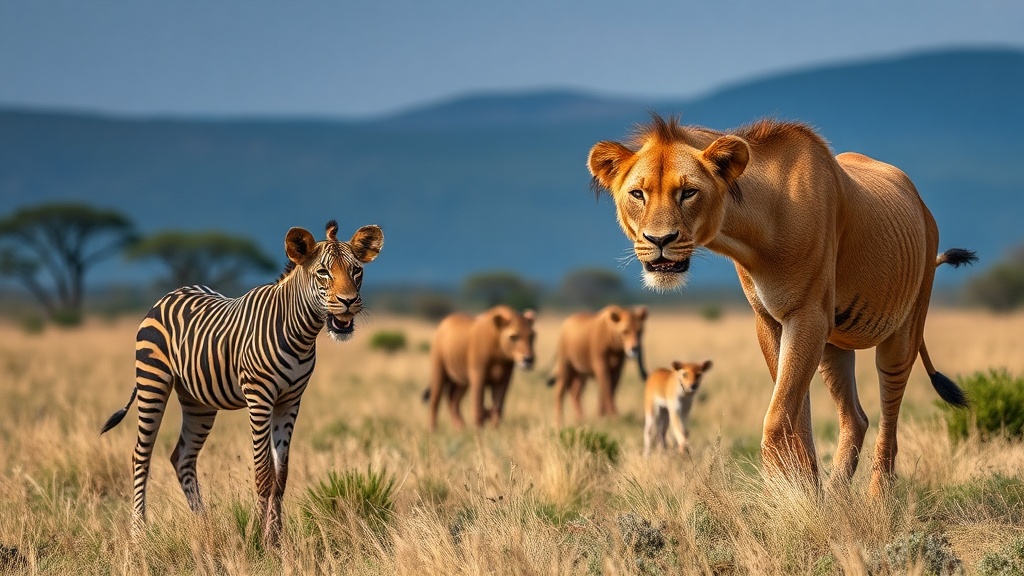
How to Photograph Wildlife on Safari Safely

The Reality of Wildlife Photography on Safari
A single rogue elephant or a charging buffalo can change the trajectory of a safari trip in less than three seconds. While many travelers focus entirely on lens focal lengths and aperture settings, the most critical component of wildlife photography is situational awareness and safety protocols. This guide provides a technical and practical framework for capturing high-quality wildlife imagery while maintaining a strict safety margin between you and the animals, whether you are in a Jeep in the Serengeti or a walking safari in Kruger National Park.
The goal is to optimize your gear and technique to get the shot without ever compromising the safety of yourself, your guide, or the wildlife. We will cover equipment requirements, positioning within a vehicle, and the technical settings needed to handle the unpredictable lighting of the African bush.
Prioritize Vehicle Safety and Positioning
In a professional safari setting, the vehicle is your primary piece of safety equipment. Most high-end photographic safaris utilize modified Land Rovers or Toyota Land Cruisers designed with high vantage points. However, your behavior inside this vehicle dictates your safety level.
Stay Inside the Vehicle: Under no circumstances should you stand up in a vehicle unless your guide has explicitly signaled that it is safe and the vehicle is stationary. In many parks, such as the Maasai Mara, animals are habituated to vehicles, but a sudden movement or a person standing up can trigger a defensive response from a predator or a large herbivore. If you are using a tripod, ensure it is secured to the vehicle's mount or held firmly so it does not tip and strike the side of the car, which creates noise and vibration.
The Role of the Guide: Your guide is not just a driver; they are a professional tracker and safety officer. Always watch the guide’s eyes, not just the animal. If the guide shifts their gaze or begins to reposition the vehicle, stop adjusting your camera settings and focus on the environment. If you are on a walking safari, which is a significantly higher-risk activity, keep your camera strap around your neck or wrist at all times. A dropped camera is a distraction you cannot afford when you need to be aware of your surroundings.
Respecting the Buffer Zone: If you see a predator like a leopard or a lion, do not ask the driver to get closer. Increasing the proximity to a predator increases the stress on the animal and the risk to the vehicle. A high-quality telephoto lens is the solution to this problem, not a closer drive-by. If the animal begins to show signs of agitation—such as flattened ears in big cats or a raised tail in elephants—signal your guide to move away immediately.
Essential Gear for Wildlife Photography
As someone who spent years optimizing hardware in a high-tech environment, I view camera gear through the lens of reliability and weight-to-performance ratios. On a safari, you are often dealing with heavy gear in high-heat environments. You need equipment that can withstand dust, heat, and long hours of use.
Lenses and Focal Lengths
You cannot rely on a standard 24-70mm lens for wildlife. You need reach. The industry standard for safari photography involves two main types of lenses:
- The Super-Telephoto Zoom: A lens like the 100-400mm or the 200-600mm is essential. These allow you to capture detail in an animal's eyes or textures in their fur from a safe distance.
- The Prime Lens: If you have the budget and the strength, a 500mm or 600mm f/4 prime lens offers incredible sharpness and low-light performance, which is vital for dawn and dusk shoots.
Support Systems
Steadying a heavy lens in a moving vehicle is a technical challenge. Do not rely on your hands alone. Use a Bean Bag. A bean bag is far superior to a tripod when shooting from a vehicle. You can rest the lens on the edge of the vehicle'-s window or the roof, and the bean bag absorbs the vibrations of the engine and the bumps of the terrain. Brands like Wimberley make excellent specialized supports, but a simple heavy-duty fabric bag filled with dried beans or plastic pellets works perfectly.
Protection Against the Elements
The African bush is incredibly dusty. Fine silt can penetrate even the most expensive weather-sealed bodies.
- Lens Cleaning: Carry a high-quality blower (like a Giotto's Rocket Blaster) and microfiber cloths. Never wipe a lens while it is dusty; use the blower first to prevent scratching the glass.
- UV Filters: Use a high-quality UV filter to protect your front element from dust and unexpected debris.
- Dust Covers: When not actively shooting, keep your lens under a cloth or inside a camera bag. Even inside a vehicle, the constant movement of air stirs up dust.
Technical Settings for Variable Light
Wildlife photography often happens during the "Golden Hours"—sunrise and sunset—or in the harsh, high-contrast light of midday. Mastering your exposure settings is the difference between a usable shot and a wasted opportunity.
Managing High Contrast and Midday Sun
When the sun is directly overhead, the shadows are deep and the highlights are blown out. This is particularly difficult when photographing animals in high grass or under acacia trees. To combat this, use Exposure Compensation. If you are shooting in Manual mode, be prepared to adjust your shutter speed rapidly. If you are in Aperture Priority, set your exposure compensation to -0.3 or -0.7 to prevent the highlights on the animal's coat from becoming "blown out."
Shutter Speed and Motion Blur
Animals are rarely static. A cheetah sprinting or a bird taking flight requires high shutter speeds.
- For Mammals: Aim for a minimum of 1/1000s. If the animal is running, push to 1/2500s or higher.
- For Birds: Birds require even faster speeds, often 1/3200s or more, due to the rapid wing beats.
Focusing Techniques
The most important part of any wildlife photo is the eyes. If the eyes are out of focus, the image is a failure. Use Animal Eye-Detection AF if your camera supports it. This technology tracks the eye of the subject with extreme precision. If you are using an older DSLR, use a single point of focus and manually move that point to the animal's eye. Avoid using wide-area autofocus, as the camera may accidentally lock onto a branch or a tuft of grass in the foreground.
Ethical Considerations and Wildlife Respect
A professional photographer's job is to document nature, not to interfere with it. Your presence should have zero impact on the animal's natural behavior. This is a core tenet of responsible adventure travel.
Avoid "The Chase": Never pressure a guide to drive closer to an animal for a "better shot." This is especially critical with nesting birds or mother animals with young. If an animal stops what it is doing (eating, sleeping, or moving) to look at your vehicle, you are too close. This is a sign of stress.
No Flash Photography: Using a flash on wildlife is highly disruptive and, in many cases, illegal in national parks. It can temporarily blind an animal, making them vulnerable to predators or causing them to bolt into danger. Rely on your lens's wide aperture and high ISO capabilities instead.
The Silent Observation: Noise travels far in the bush. Keep conversations within the vehicle to a minimum. Sudden loud noises or even the constant chatter of a group can cause animals to flee, ending your photographic opportunity. If you want to capture a moment of pure, uninhibited wildlife behavior, silence is your best tool.
By treating the safari as a technical expedition rather than just a sightseeing trip, you will return with images that capture the true essence of the wild while respecting the boundaries of the animals you've come to see. Whether you are documenting the movements of a pride of lions or the intricate details of a dung beetle, your success depends on your preparation, your gear, and your respect for the environment.
Steps
- 1
Choose the Right Lens
- 2
Use a Fast Shutter Speed
- 3
Respect the Distance
- 4
Focus on the Eyes