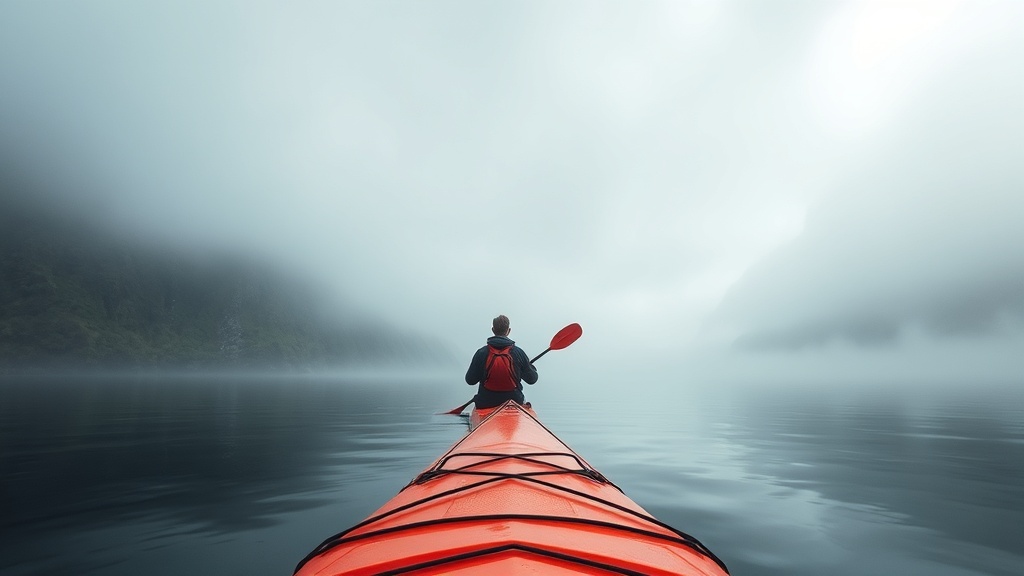
Navigating the Mist: A Kayaker's Guide to the Fjords of Norway

The Logistics of Liquid Giants
When I was working as a systems engineer at Intel, my idea of "navigating a complex environment" involved debugging kernel panics and optimizing latency. Now, when I talk about complex environments, I’m talking about the unpredictable, deep-water corridors of the Norwegian fjords. There is a profound difference between a controlled digital environment and the sheer, vertical scale of a Norwegian fjord. One is a problem to be solved; the other is a force of nature to be respected.
The fjords of Norway—specifically the Nærøyfjord and the Geirangerfjord—are among the most breathtaking landscapes on Earth. But for a kayaker, they are also intimidating. You are paddling through narrow, deep-water channels flanked by granite walls that rise thousands of feet straight up. The scale is disorienting. If a storm rolls in, or if the wind funnels through a narrow passage, you aren't just dealing with a bit of chop; you are dealing with a high-stakes maritime environment.
I’ve spent a lot of time planning expeditions for people who have 9-to-5 jobs and limited PTO. You don't have time to "wing it" in Norway. You need a high-fidelity plan. This guide is the breakdown of how to approach a fjord expedition without the fluff of a luxury cruise, focusing instead on technical readiness, gear optimization, and realistic budgeting.
The Environmental Variables: Wind, Water, and Walls
Before you book a flight, you need to understand the three primary variables that will dictate your success: the wind, the depth, and the walls.
1. The Funnel Effect: Fjords are natural wind tunnels. Even if the weather report says "light breezes," a localized wind can whip through a narrow strait with incredible velocity. This is known as the Venturi effect. If you are caught in a crosswind in a sea kayak, you can be pushed toward a rocky shoreline or a steep cliff face faster than you can paddle back. Always check the local wind forecasts (use Yr.no—it is the gold standard for Norway) and understand that wind direction matters more than wind speed here.
2. The Verticality: In many parts of the world, if you get into trouble, you can pull your kayak onto a beach. In the fjords, the "beach" is often a 1,000-foot vertical wall of granite. If you experience gear failure or physical exhaustion, there are very few places to rest. This makes your choice of launch points and exit strategies critical. Always map out "emergency landing" zones along your route, even if they are just small, rocky outcrops.
3. Water Temperature and Depth: The water in the fjords is glacial-fed. Even in July, the surface temperature can be punishingly cold. This isn't just a comfort issue; it is a survival issue. If you capsize, cold shock can take your breath away and sap your strength in minutes. I don't care how much "adventure" you have in your blood—respect the thermals.
Gear Optimization: The Engineer’s Approach
I’ve always believed that in any high-stakes environment, your gear is your most important subsystem. You don't need the most expensive gear, but you do need the most reliable gear. Here is my optimized kit list for a fjord expedition.
The Core System: Kayak and Safety
- Sea Kayak (Minimum 14-16ft): You need a boat with good tracking and stability. A recreational kayak is a mistake here; you need a true sea kayak with a skeg or rudder to handle the wind.
- Dry Suit or High-End Wetsuit: Do not debate this. If you are paddling in the fjords, a dry suit is the only way to ensure that a capsize doesn't become a medical emergency. It is an upfront cost that pays dividends in safety.
- PFD (Personal Flotation Device): Ensure it has high visibility and enough pockets for your radio and compass.
- Bilge Pump and Paddle Float: These are non-negotiable for self-rescue. If you can't get back into your boat in 60 seconds, you aren't ready for these waters.
Navigation and Communication
GPS is great, but electronics fail. Batteries die in the cold. I always carry a redundant navigation system.
- Primary: A high-quality GPS unit or a dedicated maritime navigation app on a ruggedized smartphone.
- Secondary: A traditional magnetic compass and a physical topographic map of the area.
- Communication: A VHF Marine Radio. Cell service can be spotty in the deep shadows of the fjords, but a VHF radio allows you to talk to local fishing vessels or emergency services. This is a critical piece of hardware.
The Budget Breakdown: Real Numbers
I hate "influencer" travel that hides the actual cost of an adventure. You can do this on a budget, but you can't do it cheaply if you want to do it right. Here is a realistic estimate for a 7-day kayaking expedition in the Nærøyfjord region, assuming you are traveling from the US or UK.
"The goal isn't to spend the least amount of money; it's to get the highest return on your experience per dollar spent." — Marcus
| Item | Estimated Cost (USD) | Notes |
|---|---|---|
| Flights (International) | $800 - $1,200 | Book at least 4 months out to avoid peak summer spikes. |
| Gear Rental (Kayak, Dry Suit, etc.) | $450 - $600 | Highly recommended to rent local to avoid shipping heavy gear. |
| Accommodation (Camping/Hostels) | $350 - $500 | Utilize "Allemannsretten" (Right to Roam) for wild camping to save. |
| Food & Fuel | $300 - $400 | High-calorie meals are essential for cold-water paddling. |
| Local Transport (Trains/Ferries) | $150 - $250 | Getting to the launch points via the Flåm Railway or local ferries. |
| TOTAL | $2,050 - $2,950 | This is a mid-range, high-quality adventure budget. |
Actionable Advice for the Planning Phase
If you are sitting at your desk right now, planning this out, do not just start booking things. Follow this sequence to ensure your "system" is robust.
1. Master the "Right to Roam" (Allemannsretten)
Norway has one of the best laws in the world for adventurers. Allemannsretten allows you to camp almost anywhere in the wilderness, provided you are at least 150 meters from inhabited dwellings. This is your greatest cost-saving tool. However, in the fjords, "anywhere" is limited by the steep terrain. Research your specific route to ensure there are flat enough areas for tenting.
2. The Logistics of Transport
Getting a kayak from the train station to your campsite is a logistical puzzle. Most people make the mistake of assuming they can just carry their gear. If you are renting, ask the rental shop if they offer "drop-off" services at different fjord branches. This allows you to paddle one way (e.g., from Gudvangen to Flåm) rather than doing a repetitive out-and-back loop.
3. Skill Acquisition
Do not attempt a fjord expedition if you have only paddled in a calm lake. You need to be proficient in wet exits, self-rescue, and bracing. I highly recommend taking a 2-day sea kayaking course in your home country before you fly. The muscle memory required to execute a roll or a recovery while your adrenaline is spiking is something you cannot learn from a YouTube video.
Final Thoughts: Why Bother?
Why do I spend my time breaking down these trips instead of just enjoying the view? Because the most rewarding experiences are the ones where the preparation was so thorough that the "adventure" actually happens. When you aren't worrying about your gear failing or your navigation being wrong, you can actually see the light hitting the waterfalls on the side of the Nærøydalen valley. You can feel the scale of the world.
The fjords are a high-input, high-reward environment. If you respect the variables, prepare your systems, and budget realistically, it will be one of the most profound experiences of your life. Now, get to work on that plan.