Patagonia's O Circuit Is Worth the Extra 3 Days — Here's the $2,850 Breakdown

Patagonia's O Circuit Is Worth the Extra 3 Days — Here's the $2,850 Breakdown
Alright, let's talk about Torres del Paine. Everyone knows the W Trek — it's the Instagram-famous route with those three letters painted on every other hiking boot at REI. But here's the thing: if you're flying all the way to Patagonia and you're already committed to carrying a pack for five days, the O Circuit is the real experience. The full loop. The one that actually gets you away from the crowds.
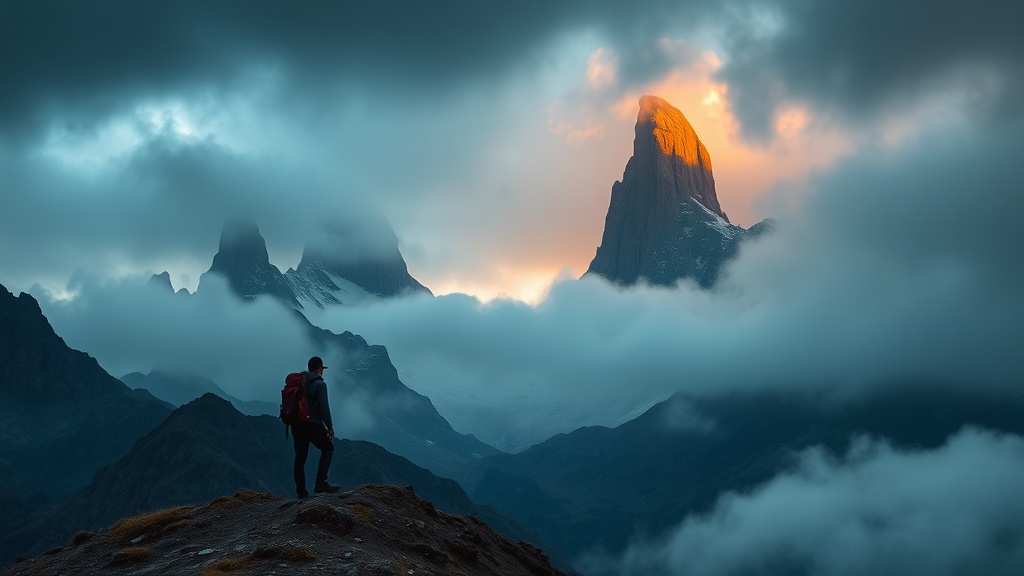
I've done both. The W is beautiful — I'm not here to trash it. But the O? That's the trip that made me quit my engineering job. Standing on the John Gardner Pass at 6 AM with the sun hitting the Grey Glacier and literally nobody else around for miles — that was the moment.
Let's break down what the O Circuit actually costs, what those extra three days get you, and why I think it's worth every extra dollar and every extra ounce in your pack.
Quick Stats: W Trek vs. O Circuit
| Trek | Duration | Distance | Crowds | Cost (DIY) |
|---|---|---|---|---|
| W Trek | 4-5 days | ~50 miles | Heavy | ~$1,800 |
| O Circuit | 7-9 days | ~80 miles | Light | ~$2,850 |
That extra $1,050 buys you: the back side of the Paine Massif (the quiet side), the John Gardner Pass, Grey Glacier up close, and a dramatically higher solitude-to-effort ratio.
What You Actually Get on the O Circuit
The W Trek covers the "front" of the mountains — the French Valley, the Towers (Las Torres), and Grey Glacier from one angle. It's stunning. But it's also where 80% of visitors go.
The O Circuit includes the entire W, then keeps going around the back. You get:
- Days 1-3: The quiet side — Cerro Paine, the Dickson area, expansive views of the Southern Patagonian Ice Field
- Day 4-5: The John Gardner Pass — the highest point (4,000 ft), knife-edge ridges, and the best views in the entire park
- Days 6-8: The classic W sections (Grey Glacier, French Valley, Towers) — but now you're hiking them west-to-east, which means fewer people
The back side is where the magic happens. You're walking through grasslands that look like the Scottish Highlands, crossing rivers on rickety bridges, and camping at refugios where you might see six other people all day.
What We Actually Spent: Complete O Circuit Budget
This is for the DIY refugio route — carrying your own gear, sleeping in the park's hut system. You can do it guided (Las Torres charges from $2,120 per person), but honestly? The route is well-marked, and the refugio system makes it manageable solo.
| Category | Cost Per Person |
|---|---|
| Flights (SCL → PUQ round-trip) | $95-116 |
| Bus (Punta Arenas → Puerto Natales) | $15 |
| Bus (Puerto Natales → Park round-trip) | $28 |
| Park entrance fee (3+ days) | $48 |
| Refugio accommodation (8 nights @ $185 avg) | $1,480 |
| Meals at refugios (breakfast/dinner packages) | $480 |
| Lunches/snacks (packed) | $140 |
| Gear rental (if needed: tent, stove, sleeping bag) | $200 |
| Travel insurance (World Nomads, 10 days) | $85 |
| Contingency/misc | $100 |
| TOTAL | $2,671-2,692 |
Prices verified February 2026. Flights via LATAM/SKY from Santiago. Refugio rates from Las Torres Patagonia official site.
Compare that to the W Trek: roughly $1,650-1,800 for 5 days. The O Circuit costs about $1,000 more for three extra days — that's actually a better daily rate (~$335/day vs. ~$360/day).
The Real Difficulty
Here's where I need to be honest with you. The O Circuit is harder than the W. Not dramatically, but noticeably.
The John Gardner Pass is the crux. It's a 2,500-foot climb over 6 miles, often in wind that'll knock you sideways. The weather changes in minutes. I've seen horizontal rain turn to blazing sun in twenty minutes up there.
Fitness baseline: You should be comfortable hiking 10-12 miles per day with a 35-40 pound pack, handling 2,000+ feet of elevation gain, for 7-9 consecutive days. If the W Trek is a 6/10, the O Circuit is an 8/10.
The logistics are more complex. You need to carry more food (there's a 2-day stretch with no resupply between Dickson and Grey). The weather window is narrower — you really want stable-ish conditions for that pass crossing.
When to Go (And Why March-April Is the Sweet Spot)
The O Circuit opens in late October and closes in early April. I did it in late March, and it was perfect.
- December-February: Peak summer. Longest days, best weather, but the back side campsites are packed with guided groups.
- March-April: This is the sweet spot. Shoulder season prices, 40% fewer people, and you still get 10-11 hours of daylight. The fall colors start hitting in late March. I've seen flights drop to $85 round-trip from Santiago in March.
- October-November: Also good, but more variable weather. Some services might not be fully operational yet.
I paid $98 for my round-trip flights in late March 2024. The refugios had availability (booked 2 weeks out, not 2 months). And on the John Gardner Pass, we saw exactly four other people all morning.
What I'd Do Differently
Honestly? I wouldn't change much. But if I were planning it again:
1. Book the Serón and Dickson refugios early. These are the limited back-side huts. They sell out faster than the W-side refugios because there are fewer beds. I booked 6 weeks out and got my dates, but 8-10 weeks is safer.
2. Bring a real rain jacket. Not a "water-resistant windbreaker." I mean Gore-Tex or equivalent. My Arc'teryx Beta LT was worth every penny when the pass turned into a sideways waterfall for two hours.
3. Skip the tent and rent at refugios. I carried my own tent for "authenticity" and regretted it by Day 3. The refugio tents are bomber (Hilleberg or equivalent), already set up, and you don't carry them. The $200 rental fee is cheaper than the gear transport hassle.
4. Budget an extra day in Puerto Natales. Weather delays are real. If your pass day gets blown out by 60mph winds, you need buffer time. We had to hunker down at Grey for an extra night because the rangers closed the pass. Having that buffer saved our itinerary.
Gear That Actually Mattered
Here's what lived in my pack for 8 days and justified its weight:
- Darn Tough Hiker Micro Crew socks (2 pairs): Rotated daily, zero blisters, 80 miles later they look new. Lifetime guarantee means lifetime.
- Merino wool base layers (Smartwool 150): Wore them for 8 days straight. Somehow didn't smell like death. Game-changer.
- Trekking poles: Non-negotiable for the John Gardner descent. Saves your knees and gives you a third point of contact in the wind.
- Water purification tablets: Every stream in the park is drinkable. I carried 1 liter and refilled constantly. Saved maybe 3 pounds of pack weight vs. carrying full water.
- Puffy jacket (down, not synthetic): Mornings at Dickson were below freezing. Packable warmth is worth the ounces.
How to Book It (Step-by-Step)
Here's exactly what you need to do:
- Flights: Book Santiago (SCL) to Punta Arenas (PUQ). LATAM and SKY both run multiple daily flights. I like Google Flights price tracking — set an alert and book when it drops under $110 round-trip.
- Bus to Puerto Natales: Book with Bus-Sur or transfer directly at the airport. It's a 3-hour ride, about $15.
- Refugios: Book directly through Las Torres Patagonia. You'll need nights at: Serón, Dickson, Los Perros, Grey, Paine Grande, Francés or Cuernos, and Central (for the Torres day).
- Park entrance: Buy online at pasesparques.cl before you arrive. The multi-day pass is CLP 46,200 (~$48 USD).
- Travel insurance: I use World Nomads for adventure trips. Make sure it covers trekking up to 4,000 meters (the John Gardner Pass is ~1,200m, but policies are weird about Patagonia specifically).
Book the refugios first — they're the bottleneck. Everything else can be arranged in Puerto Natales if needed.
The Verdict
Look, the W Trek is beautiful. If you genuinely only have 5 days, do the W and love it. But if you have 8-9 days and you're on the fence about the O Circuit?
Do the O Circuit.
Those extra three days on the back side — the grasslands, the ice field views, the pass crossing, the solitude — that's the Patagonia you flew 15 hours to see. The W is a crowded scenic highway. The O is the actual wilderness.
At roughly $2,850 all-in from Santiago, you're looking at about $315 per day for one of the best multi-day treks on the planet. That's cheaper than a mid-range hotel in most US cities. And you get glaciers, granite towers, condors, and the kind of silence that makes you realize how loud your normal life is.
Worth it? Without question. Start training. Book those refugios. I'll see you on the back side.
Questions? I've done both circuits and I'm active in the comments. Drop your specific questions and I'll answer them.
This post contains affiliate links. If you book through these links, I earn a small commission at no extra cost to you. I only recommend operators and gear I've personally vetted.