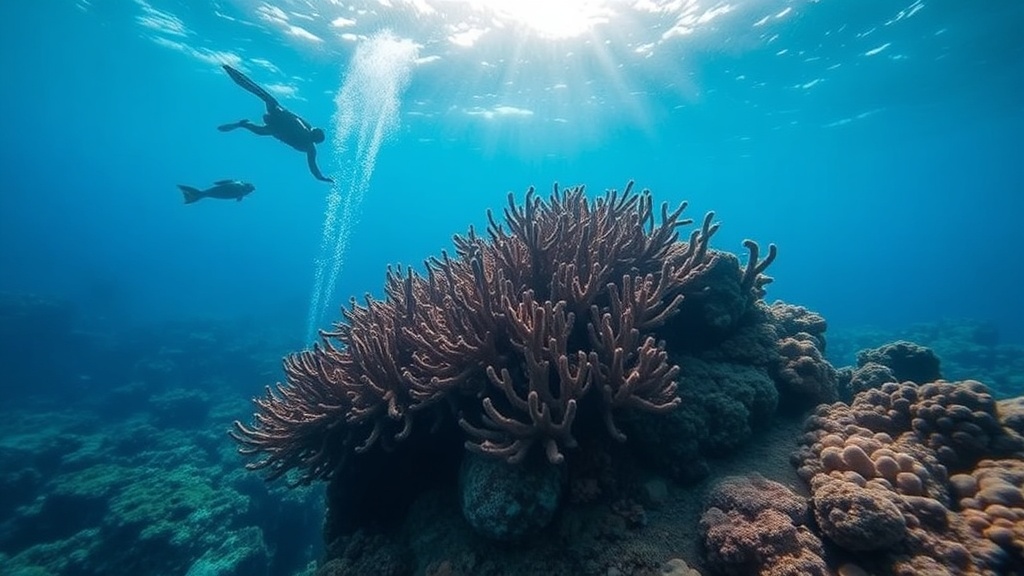
Real Cost of Raja Ampat: Diving the Coral Triangle on a 9-5 Budget

Can you actually dive the world's most biodiverse reefs without spending six months' salary or quitting your job? Many people look at Raja Ampat—a remote archipelago in Indonesia's West Papua province—and assume it's reserved for the ultra-wealthy or the homeless wanderer with a year to kill. It isn't. This guide breaks down the cold, hard math of getting to the Coral Triangle, choosing between a luxury boat and a local shack, and optimizing your limited vacation days for maximum bottom time. If you're coming from a high-pressure career where every hour is billable, you need to know exactly where your money goes and where it's being wasted.
Is a Liveaboard Better than a Homestay for Serious Divers?
This is the first decision you'll make, and it's the biggest driver of your total spend. As an engineer, I look at this through the lens of efficiency versus cost. A liveaboard is essentially a floating hotel that moves while you sleep. You wake up at a new site, dive four times a day, and everything is handled. These trips usually start around $300 a day and can easily hit $600 for the high-end vessels. For a 10-day trip, you're looking at $3,000 to $6,000 before you even buy a plane ticket. It's expensive, but the dive-per-dollar ratio is high because you're hitting remote spots like Misool and Wayag that are hard to reach otherwise.
On the flip side, the homestay model has exploded in the Dampier Strait. You stay in a wooden hut on stilts over the water, built and run by local families. These cost about $35 to $50 a night, which includes three meals. It's an incredible deal. However, you aren't just paying for the room. You have to pay for the boat to take you to the dive sites. A single dive usually runs about $35 to $45. If you do three dives a day, your daily total (room, food, and diving) sits around $150. That's half the cost of a cheap liveaboard. The trade-off? You'll be restricted to the sites within a 30-minute boat ride of your hut, and you'll be sleeping under a mosquito net without air conditioning. For most people with a 9-5 job, the homestay offers a more grounded experience, but the liveaboard offers more 'raw' data in terms of species encountered.
What Hidden Costs Should You Expect in West Papua?
The price of the dive package isn't the price of the trip. You'll need to account for the Raja Ampat Marine Park Entry Permit, often called the 'PIN.' This costs 1,000,000 Indonesian Rupiah (roughly $65 USD) for international visitors. It's a required fee that supports local conservation and community projects. You can check the current rates and purchase it through the official Marine Park website. Don't try to skip this; most reputable operators won't let you in the water without it.
Then there's the gear. If you own your kit, you're looking at heavy excess baggage fees on domestic flights. Airlines like Garuda Indonesia or Batik Air are strict about their 20kg limits. Paying for an extra 15kg of dive gear can add $100 to your round-trip domestic flights. If you don't dive more than twice a year, renting might actually be the smarter move. Most homestays and boats charge $20 to $30 a day for a full set. Do the math before you pack that heavy regulator bag. Also, remember that tips for the boat crew and dive guides are standard. Expect to set aside 10% of your trip cost for the people who are literally keeping you alive and finding those pygmy seahorses for you.
How Do You Maximize Dive Time on a Limited Vacation Schedule?
Getting to Sorong (SOQ), the gateway to Raja Ampat, is a mission in itself. If you're coming from the US or Europe, you'll likely fly into Jakarta or Singapore. From there, you'll take a red-eye flight that lands in Sorong early in the morning. This is where people mess up. They book a flight that lands at 10:00 AM, missing the morning ferry to Wasai. Now they're stuck in a sweaty port town for a night, wasting a vacation day. You want to land by 7:00 AM. This gives you time to grab the 9:00 AM ferry and be in the water by 2:00 PM the same day.
Optimization doesn't stop at the airport. Because of the 'no fly' rule after diving—usually 18 to 24 hours—you'll lose your last day of the trip. If you have a 10-day window, you're really only diving for eight. To get the most out of those eight days, focus your trip on one area. Don't try to see the North and the South in one go unless you're on a 14-day liveaboard. If you're staying in homestays, pick one on Mansuar or Kri island. These are central to world-class sites like Cape Kri, where PADI has recorded some of the highest fish counts on the planet. You'll spend less time on a small boat and more time at 60 feet.
You should also consider the 'professional's tax' on travel: connectivity. Raja Ampat is remote. While some islands have towers, the data is spotty at best. If you're the type of person who needs to check emails to keep the boss happy while you're away, buy a local Telkomsel SIM card at the Sorong airport. Don't rely on the homestay's 'Wi-Fi'—it usually doesn't exist. Being able to fire off a few quick replies from a beach hut means you can stay out for two weeks instead of one. It's a small price to pay for extended freedom.
The food situation is another area where expectations need to meet reality. In a homestay, you'll eat a lot of rice, fish, and greens. It's healthy, it's fresh, and it's included in your price. If you have a refined palate that demands steak or imported cheese, you'll be disappointed. This isn't Bali. There are no beach clubs or high-end bistros in the Dampier Strait. You're there for the ocean. Embracing the local diet isn't just a way to save money; it's the only way to eat in these islands. The cost of 'western' snacks in Sorong is triple what you'd pay in Jakarta, so if you need your specific protein bars, bring them from home.
The final variable is health. You're in a malaria-prone zone and hours away from a decent hospital. Travel insurance that covers emergency evacuation is a non-negotiable expense. I've seen people try to save $150 by skipping insurance, only to face a $50,000 bill when they get a bad case of the bends or a nasty infection. It's an illogical risk. Think of it like a redundancy system in a server—you hope you never use it, but you're a fool if you don't have it running in the background.
| Expense Item | Homestay (10 Days) | Liveaboard (10 Days) |
|---|---|---|
| Accommodation & Food | $450 | $3,500 |
| Diving (25 Dives) | $1,000 | Included |
| Marine Park PIN | $65 | $65 |
| Domestic Flights (from CGK) | $400 | $400 |
| Gear Rental/Baggage | $250 | $200 |
| Total Estimated Cost | $2,165 | $4,165 |
When you look at the numbers, the gap between the two styles is about $2,000. For some, that's the price of a second trip later in the year. For others, the comfort and range of a boat are worth every penny to ensure their one big trip of the year is perfect. I've done both. When I was younger and had more time than money, the homestays were the obvious choice. Now, when my time is the scarcest resource I have, the efficiency of a boat is hard to beat. Whatever you choose, Raja Ampat isn't just another dive spot. It's the place that will make every other reef you see for the rest of your life look a bit empty. Plan the logistics correctly, account for the hidden fees, and get your fins in the water.