The 8-Week Trek Training Plan I Use Before Every Big Trip

This post contains affiliate links. If you book through these links, I earn a small commission at no extra cost to you. I only recommend gear and resources I've personally used.
The 8-Week Trek Training Plan I Use Before Every Big Trip
I've shown up to treks in two very different states of fitness. On the Salkantay Trek in 2022, I'd been sitting at a desk for three straight months and thought "eh, I hike on weekends, I'll be fine." By day two, my quads were screaming on every downhill step and I was the slowest person in the group. On the Alta Via 1 last summer, I followed an actual training plan. Night-and-day difference. I finished each day tired but not wrecked, kept up with the group easily, and actually enjoyed the scenery instead of staring at my boots willing my legs to cooperate.
The difference wasn't talent or age. It was eight weeks of targeted preparation.
This is the training plan I now use before every multi-day trek — whether it's a 5-day hut-to-hut in the Dolomites or a 14-day Everest Base Camp expedition. It's built for people with desk jobs who can realistically commit 5-6 hours per week to training. No gym membership required, though one helps.
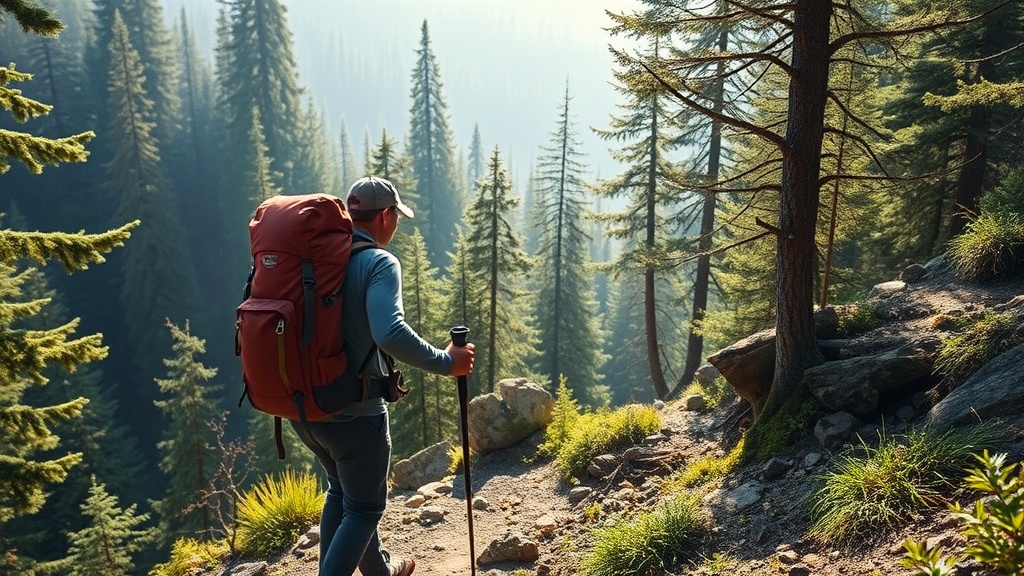
What This Plan Covers (And Who It's For)
This plan is for anyone preparing for a multi-day trek of 4-14 days with moderate to strenuous daily mileage (8-15 miles per day) and significant elevation change. Think: Patagonia's W Trek, the Laugavegur Trail in Iceland, Kilimanjaro, EBC, or any of the Alpine hut-to-hut routes.
If you can currently walk 5 miles without stopping and climb two flights of stairs without getting winded, you have enough baseline fitness to start this plan. If you can't do that yet, add 4-6 weeks of general walking before starting.
You'll train four components:
- Cardiovascular endurance — so you can hike 6-8 hours without bonking
- Leg strength — specifically for uphills AND downhills (downhill destroys unprepared knees)
- Core stability — for balance on uneven terrain with a loaded pack
- Pack conditioning — because hiking with 20-30 lbs changes everything
The Weekly Schedule
Here's the overall structure. I'll break down each phase below.
| Week | Phase | Weekly Hours | Focus |
|---|---|---|---|
| 1-2 | Foundation | 3-4 hrs | Build base endurance + start strength work |
| 3-4 | Build | 4-5 hrs | Increase distance and elevation, add pack weight |
| 5-6 | Peak | 5-6 hrs | Simulate trek conditions, back-to-back long days |
| 7 | Peak+ | 5-6 hrs | Longest training hike, full pack weight |
| 8 | Taper | 2-3 hrs | Reduce volume, maintain intensity, rest up |
Phase 1: Foundation (Weeks 1-2)
The goal here is simple: establish a routine and start building the specific muscle groups you'll need. Don't go hard. You're laying groundwork.
Each week:
- 2 hikes — 3-5 miles each, with some elevation gain if possible. Flat is fine to start. Pace doesn't matter yet.
- 2 strength sessions — 20-30 minutes each (details below)
- 1 cardio session — 30-45 minutes of anything that elevates your heart rate (bike, swim, stair climber, brisk walk)
Foundation strength circuit (do 3 rounds):
- Bodyweight squats — 15 reps
- Walking lunges — 10 per leg
- Step-ups on a bench or stair — 12 per leg
- Plank — 30-45 seconds
- Side plank — 20 seconds per side
- Calf raises — 20 reps
This circuit takes about 15 minutes. Do it twice per week. If you can knock it out easily, you're in better shape than I expected — add a 10-lb weight to the squats and lunges.
Phase 2: Build (Weeks 3-4)
Now you start simulating actual trek conditions. This is where you introduce pack weight and elevation.
Each week:
- 1 midweek hike — 4-6 miles with a pack (start with 10-15 lbs). Find hills. Take stairs. Seek out the steepest thing near you.
- 1 long weekend hike — 6-8 miles with 15 lbs. This is your primary endurance builder.
- 2 strength sessions — graduate to the Build circuit below
- 1 stair session — find a building with 5+ floors and do 20-30 minutes of continuous stair climbing. This single exercise did more for my Kilimanjaro prep than anything else.
Build strength circuit (3-4 rounds):
- Weighted squats (dumbbells or pack) — 12 reps
- Reverse lunges — 10 per leg (these target your glutes harder for uphill power)
- Step-ups with 10-15 lb pack — 12 per leg, using a higher step (18-20 inches)
- Single-leg deadlifts — 8 per leg (this is your secret weapon for trail stability)
- Plank — 45-60 seconds
- Dead bugs — 10 per side
- Lateral band walks — 15 per direction (if you have a resistance band)
The downhill killer: Most people train for uphills and forget that downhills destroy your quads. In Week 4, start doing eccentric squats — lower yourself slowly over 4 seconds, then stand up normally. Three sets of 10. Your quads will thank you on day three of whatever trek you're doing.
Phase 3: Peak (Weeks 5-7)
This is where the real work happens. You're going to simulate what your body will experience on the actual trek.
Each week:
- 1 midweek hike — 5-7 miles with 15-20 lbs
- 1 long weekend hike — 8-12 miles with full pack weight (whatever you'll carry on the trek). Week 7 should be your longest single hike.
- 1 back-to-back day — In at least one of these three weeks, hike two consecutive days. This is critical. Your body needs to learn what it feels like to wake up sore and hike again. I usually do this in Week 6 with a Saturday 8-miler and a Sunday 5-miler.
- 2 strength sessions — same Build circuit but with more weight
- 1 stair session — 30-40 minutes, wearing your pack
Week 7 target: One hike of 10-14 miles with your full expected pack weight and as much elevation gain as you can find. If you can do that and walk normally the next day, you're ready.
Phase 4: Taper (Week 8)
This is the week before your trip. The biggest mistake I see people make is cramming in extra training the last week. Don't. You can't build fitness in 7 days, but you absolutely can injure yourself or show up exhausted.
Week 8 schedule:
- Monday — Easy 30-minute walk + light strength (bodyweight only, 2 rounds)
- Wednesday — 3-4 mile easy hike, no pack
- Friday — Rest or gentle yoga/stretching
- Saturday/Sunday — Fly to your destination
That's it. Trust the work you put in over the past seven weeks.
The Altitude Factor
If your trek goes above 3,000 meters (roughly 10,000 feet) — EBC, Kilimanjaro, Salkantay, parts of Patagonia — you need to know something uncomfortable: you cannot train for altitude at sea level.
I don't care how many YouTube videos tell you to breathe through a straw or buy a $3,000 altitude tent. The research is clear — no amount of cardiovascular fitness prevents altitude sickness. I've seen ultra-marathoners get wrecked at 4,500m while a 55-year-old accountant cruised past them.
What fitness DOES do is reduce the overall physical stress on your body so you can handle altitude stress better. Think of it as lowering your baseline effort level, so when altitude reduces your oxygen capacity by 20-40%, you still have reserves.
What actually helps with altitude:
- Acclimatization schedule — choose an itinerary with proper acclimatization days built in. If a Kilimanjaro operator offers a 5-day route, walk away. Seven days minimum.
- Hydration — 3-4 liters per day starting 2-3 days before reaching altitude
- Acetazolamide (Diamox) — talk to your doctor. I take 125mg twice daily starting the day before reaching 3,000m. It makes your fingers tingle and beer taste flat, but it works.
- The climb-high-sleep-low principle — this is the single most important factor. Your itinerary should have you hiking to a higher elevation during the day and dropping down to sleep.
Gear to Train With
Train in the actual gear you'll use on the trek. This sounds obvious but I messed this up on my first big trip when I showed up in brand-new boots. Four blisters by lunch on day one.
Break in during training:
- Boots/trail shoes — wear them on every training hike from Week 2 onward. You need at least 50 miles on them before your trek.
- Pack — use your actual pack with weight during training hikes. Adjust the fit until it's dialed. You should be able to wear it for 3+ hours without hot spots.
- Socks — this is not the time to save money. Get proper hiking socks (I use Darn Tough — lifetime warranty and they actually last) and wear them during every training hike.
- Trekking poles — if you'll use them on the trek, practice with them. They're not just for balance; proper pole technique transfers 15-20% of your effort from your legs to your arms.
The Mental Side Nobody Talks About
Physical preparation gets all the attention, but here's what actually makes or breaks a multi-day trek: your ability to keep going when you're uncomfortable, wet, tired, and facing another 4 hours of hiking.
My engineering brain wants to optimize everything, but the hardest thing about a 14-day trek to Everest Base Camp wasn't the altitude or the physical effort — it was day 9, when I was tired of dal bhat, tired of being cold, and the trail felt like it would never end.
Some things that help:
- Train in bad weather. Deliberately hike in rain at least twice during your training. You need to know what it feels like to be wet and still moving.
- Do at least one training hike where you want to quit and don't. Not because you're injured — but because you're tired and bored and would rather be on the couch. Push through that. That's the exact feeling you'll have on day 5 of your trek.
- Practice being uncomfortable. Cold shower after your hike. Skip a meal before a training hike. Sleep in your tent in the backyard. All of this sounds silly, but it expands your comfort zone incrementally.
My Actual Training Log: Dolomites Alta Via 1 Prep
Here's what I actually did before my Alta Via 1 trek last summer, because I think seeing a real example is worth more than a theoretical plan:
| Week | Hike Miles | Elevation (ft) | Pack Weight | Strength Sessions | Notes |
|---|---|---|---|---|---|
| 1 | 8 | 800 | None | 2 | Forest Park loops, flat-ish |
| 2 | 10 | 1,200 | 8 lbs | 2 | Added Angel's Rest trail for hills |
| 3 | 12 | 2,400 | 12 lbs | 2 | Dog Mountain — that's a proper climb |
| 4 | 14 | 3,000 | 15 lbs | 2 | Started stair sessions (downtown parking garage) |
| 5 | 16 | 3,800 | 18 lbs | 2 | First back-to-back weekend |
| 6 | 18 | 4,200 | 22 lbs | 2 | Hamilton Mountain + Beacon Rock B2B |
| 7 | 15 | 4,500 | 25 lbs | 1 | Eagle Creek 13-miler was the peak hike |
| 8 | 6 | 600 | None | 1 (light) | Taper week — just easy Forest Park walks |
Total: roughly 99 miles over 8 weeks, with a gradual build in pack weight from 0 to 25 lbs. My actual pack on the AV1 was about 22 lbs, so I trained slightly heavier.
Common Mistakes
I've made most of these, so learn from my poor decisions:
- All cardio, no strength. Running 5 miles is not the same as hiking 5 miles with a pack over uneven terrain. You need leg strength, not just aerobic capacity.
- Ignoring downhill training. Eccentric muscle contractions (the ones that control your descent) cause the most post-hike soreness. Train for downhills specifically.
- New gear on trek day. Everything you wear on the trek should have at least 40-50 miles of training use. New boots are blister machines.
- Skipping the taper. Your muscles need 5-7 days to fully recover and benefit from your training. A hard hike 3 days before your trek makes you weaker, not stronger.
- Training on flat ground only. If you live somewhere flat, find a building with stairs or a treadmill with incline. You need to train elevation gain specifically.
The Bottom Line
Eight weeks is enough to prepare for most multi-day treks if you're starting from a reasonable fitness baseline. You don't need to become an athlete — you need to be specifically prepared for the demands of hiking 6-8 hours per day with a pack, over terrain that's uneven, steep, and sometimes at altitude.
The biggest return on investment comes from three things: weighted stair climbing, back-to-back hiking days, and training in your actual gear. Everything else is refinement.
Start your plan 8 weeks before your trek departure date, and you'll show up feeling like you could do this twice. That's exactly where you want to be.
Have a specific trek you're training for? I've got detailed cost and itinerary breakdowns for Patagonia's W Trek, Everest Base Camp, the Dolomites Alta Via 1, and more. Check those out once your body's ready — I'll handle the budget side.