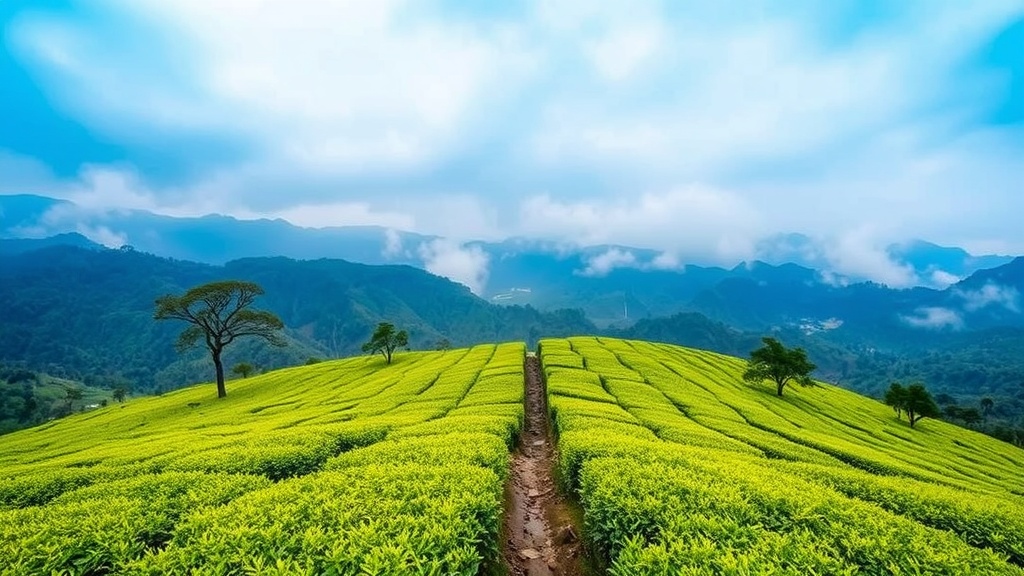
Finding Serenity in the Tea Gardens of Yunnan

The mist clings to the emerald slopes of the Pu'er tea mountains, obscuring the jagged edges of the Hengduan Mountains until only the scent of damp earth and fermented leaves remains. This post provides a practical roadmap for travelers looking to navigate the Yunnan province of China to experience high-altitude tea cultivation, traditional ethnic minority cultures, and the logistics of trekking through the Pu'er and Xishuangbanna regions. Whether you are looking to source authentic aged tea or simply want to trek through high-altitude tea forests, this guide breaks down the costs, the transport, and the essential gear required for a serious expedition into the heart of China's tea country.
The Logistics of Reaching Yunnan
Most travelers use Kunming (KMG) as their primary entry point. Kunming is the capital of Yunnan and serves as the central hub for both high-speed rail and regional flights. If you are coming from Europe or North America, you will likely transit through Shanghai or Beijing. Once you land in Kunming, you have two main options for moving toward the tea-producing regions: the high-speed rail network or domestic flights.
For a more efficient trip, I recommend the high-speed train to Xishuangbanna (Jinghong). The journey from Kunming to Jinghong takes approximately 3 to 4 hours via the high-speed rail. This is significantly more reliable and cost-effective than trying to navigate regional bus networks, which can be unpredictable due to mountain weather. If your goal is the higher-altitude Pu'er tea regions, you will want to head toward the Lincang or Pu'er cities. The rail network is expanding, but for the more remote tea forests, you will eventually need to rent a vehicle or hire a local driver.
Transport Costs and Practical Tips
- High-Speed Rail: Expect to pay between $25 and $50 USD for a second-class seat on the Kunming to Jinghang route.
- Private Drivers: If you are heading into the remote tea gardens of the Ailao Mountains, hiring a driver is essential. Budget approximately $100–$150 USD per day for a private car and driver.
- Local Transport: Within cities like Jinghong or Pu'er, use the Didi app (the Chinese equivalent of Uber) to avoid haggling with taxi drivers. It is much more transparent for travelers on a budget.
Navigating the Tea Regions: Xishuangbanna vs. Pu'er
While both regions are synonymous with tea, they offer vastly different experiences. Xishuangbanna, located in the tropical south near the Laos border, is the center for Bulang and Dai culture. The tea here is often grown in a more tropical, lush environment. This is where you will find many of the more commercialized tea markets, but it is also home to some of the oldest tea trees in the world.
Pu'er, on the other hand, sits at a higher altitude and offers a more rugged, mountainous landscape. This is the territory of the Hani and Yi people. The tea grown here—specifically the aged Pu'er—is the gold standard for collectors. If you are looking for a serious trekking experience through ancient tea forests, the mountains surrounding Pu'er and Lincang offer much more challenging terrain and less tourist interference than Xishuangbanna.
The High-Altitude Trekking Experience
Trekking through the tea forests requires more than just a pair of hiking boots. You are dealing with steep, often slippery terrain and rapid weather changes. I suggest a minimum of a 4-day trek to truly experience the transition from the valley floors to the high-altitude groves. You should carry a lightweight, waterproof shell (like a Patagonia Torrentshell) because the mist in these tea gardens can turn into a heavy downpour in minutes.
Unlike the more standard hiking trails found in 7 epic adventure destinations, the paths in the Yunnan tea mountains are often narrow, single-track trails used by local farmers. There is no marked wayfinding. I highly recommend hiring a local guide from the village you are staying in. Not only does this support the local economy, but they also understand the nuances of the local tea harvesting cycles, which dictates much of the movement in the region.
Sourcing and Understanding Pu'er Tea
One of the primary reasons people visit this region is to source authentic tea. However, the market is flooded with "fake" aged Pu'er. As someone who spent years optimizing workflows in engineering, I approach tea sourcing with a similar level of scrutiny. You need to understand the difference between Sheng (raw) and Shu (ripe) Pu'er before you spend a single dollar.
Sheng (Raw) Pu'er: This is the unfermented version. It is more volatile, can be quite bitter when young, and requires years (sometimes decades) of aging to reach its peak. It is a high-risk, high-reward investment for collectors.
Shu (Ripe) Pu'er: This is tea that has undergone an accelerated fermentation process (Wo Dui). It is smoother, earthier, and much more consistent. If you are a beginner, start with Shu Pu'er to understand the flavor profile without the extreme bitterness of young Sheng.
How to Buy Like a Pro
- Avoid the "Tourist" Shops: The shops directly in the center of Jinghong or near major train stations are often overpriced and carry lower-quality stock.
- Look for the "Tea Warehouses": Seek out smaller, family-run tea houses in the outskirts of Pu'er or Lincang. This is where the real inventory is kept.
- Check the Compression: High-quality tea is often pressed into "Bing Cha" (discs). Look for evenness in the compression and ensure the leaves are not broken or overly dusty.
- Ask for a Tasting: A reputable vendor will always allow you to sample the tea before purchase. If they are hesitant to brew a sample, walk away.
Essential Gear and Packing List
Because you are moving between tropical lowlands and high-altitude mountains, your gear needs to be versatile. You cannot pack for just one climate. The temperature delta between the Xishuangbanna valleys and the Pu'er mountains can be 15-20 degrees Celsius.
The Technical Layering System
I recommend a three-layer approach. A moisture-wicking base layer (merino wool is best for odor control during long treks), a mid-layer for insulation (a lightweight down jacket or fleece), and a high-quality waterproof outer shell. Avoid heavy cotton; once it gets wet from the tea-garden mist, it will stay wet and sap your body heat.
Footwear and Navigation
Your boots need aggressive tread. The terrain in the tea forests is often composed of loose soil and wet roots. A shoe like the Salomon Quest 4 GTX is a solid choice for this type of terrain. Additionally, do not rely solely on Google Maps. In the remote tea regions, GPS can be spotty, and many trails are not digitally mapped. Carry a physical topographical map and a dedicated GPS device or an offline map application like Gaia GPS.
Budgeting for Your Yunnan Expedition
Yunand is significantly more affordable than Western Europe or even coastal China, but "budget" is a relative term. If you want to do this right—with decent transport and quality guides—you need to budget for more than just a backpacker's hostel.
- Mid-Range Daily Budget: $50–$70 USD per day. This covers a decent boutique hotel, three solid meals (including some specialty tea service), and local transport.
- High-End Experience: $150+ USD per day. This would include private drivers, high-end tea tastings, and luxury stays in places like the Anantara in Xishuangbanna.
- Tea Sourcing Budget: This is the wildcard. A decent aged tea disc can cost anywhere from $30 to $500 USD. If you plan on buying tea, set a specific "acquisition fund" separate from your travel budget.
For those looking for more intense culinary experiences to supplement their travels, check out my guide on savoring the spice in Vietnam, as the flavors in Yunnan—while different—share a similar focus on fresh, regional ingredients and street-level authenticity.
Final Practical Advice
The most important thing to remember when traveling through Yunnan is that the pace of life is dictated by the seasons and the tea. If you arrive during a peak harvesting month, the markets will be crowded and prices will be higher. If you arrive during the off-season, you might find better prices, but fewer opportunities to see the active cultivation process. Plan your trip around the harvest cycles of the specific tea varieties you are most interested in seeing.